블로그

  • 버튼 – UX 라이팅

    버튼 – UX 라이팅

    사용자에게 가장 명료한 한국어 용어 선택 가이드


    개요

    버튼은 사용자와 시스템 간의 상호작용을 연결하는 중요한 매개체로, 그 위에 쓰인 텍스트는 사용자가 버튼의 목적과 결과를 이해하는 데 결정적인 역할을 합니다. 특히 한국어 버튼 텍스트는 문화적 맥락과 언어적 특성을 고려하여 명확하고 직관적으로 작성해야 합니다. 이번 글에서는 버튼 UX 라이팅 관점에서 한국어로 가장 명료하게 사용자에게 인지될 수 있는 용어를 선택하는 방법과 이를 설계에 적용하는 구체적인 가이드를 다룹니다.


    UX 라이팅이란 무엇인가?

    UX 라이팅(User Experience Writing)은 사용자 경험을 향상시키기 위해 인터페이스의 텍스트(버튼, 레이블, 알림 메시지 등)를 전략적으로 작성하는 작업입니다. 특히 버튼 텍스트는 사용자가 다음 행동을 결정할 수 있도록 도와주는 핵심적 역할을 합니다.

    UX 라이팅의 핵심 원칙

    1. 명확성(Clear): 버튼을 클릭했을 때 발생할 행동을 한눈에 이해할 수 있어야 합니다.
    2. 간결성(Concise): 텍스트는 짧고 간결해야 하지만, 충분한 정보를 제공해야 합니다.
    3. 행동 중심(Action-Oriented): 사용자의 행동을 유도하는 동사가 포함되어야 합니다.
    4. 일관성(Consistent): 서비스 전반에서 버튼 텍스트의 톤과 스타일을 일관되게 유지해야 합니다.

    버튼 UX 라이팅에서 명료한 한국어 용어 선택 방법

    한국어 버튼 텍스트는 직관성과 문화적 맥락을 모두 반영해야 합니다. 다음은 이를 구현하기 위한 주요 전략입니다.


    1. 동사로 시작하여 행동 유도

    버튼 텍스트는 행동을 유도하는 역할을 하기 때문에 명령형 동사로 시작하는 것이 가장 효과적입니다. 예를 들어, “제출” 대신 “제출하기”로 작성하면 더 자연스럽고 명확한 행동을 전달할 수 있습니다.

    좋은 예:

    • “저장하기”
    • “구매하기”
    • “등록 완료하기”

    나쁜 예:

    • “저장”
    • “확인”
    • “완료”

    UX 라이팅 팁

    • 사용자 행동을 명확히 드러내는 동사를 사용하세요.
    • 추상적인 단어 대신 구체적인 동작을 표현하는 동사를 선택하세요.

    2. 맥락에 맞는 용어 선택

    버튼의 텍스트는 사용자가 처한 상황과 맥락에 적합해야 합니다. 맥락과 맞지 않는 텍스트는 사용자의 혼란을 초래할 수 있습니다.

    예시: 결제 페이지

    • 좋은 예:
      • “결제하기”
      • “결제 정보 입력”
    • 나쁜 예:
      • “다음” (결제 맥락을 명확히 전달하지 않음)

    예시: 입력 폼 제출

    • 좋은 예:
      • “폼 제출하기”
      • “정보 저장”
    • 나쁜 예:
      • “확인”

    3. 긍정적인 톤 유지

    사용자는 긍정적이고 명확한 텍스트에 더 신뢰를 느낍니다. 부정적인 어조나 불안감을 조성하는 텍스트는 피해야 합니다.

    좋은 예:

    • “회원가입 완료하기”
    • “내 정보 저장”

    나쁜 예:

    • “가입하지 않으면 진행할 수 없습니다”
    • “취소하면 데이터가 사라질 수 있습니다”

    UX 라이팅 팁

    긍정적인 언어는 사용자에게 자신감을 주며, 서비스와의 긍정적인 관계를 형성합니다. 부정적인 결과는 메시지로 전달하되, 버튼 텍스트는 항상 행동을 긍정적으로 이끌어야 합니다.


    4. 일관된 어조와 표현 사용

    서비스 전반에서 버튼 텍스트의 어조와 스타일은 일관성을 유지해야 합니다. 한 페이지에서 “등록하기”라고 쓰고, 다른 페이지에서 “등록 완료”라고 쓰면 사용자에게 혼란을 줄 수 있습니다.

    좋은 예:

    • “등록하기” → “등록 완료하기”
    • “저장하기” → “저장되었습니다”

    나쁜 예:

    • “저장” → “저장 완료됨”
    • “제출” → “확인되었습니다”

    5. 간결한 한국어 표현 사용

    한국어는 명사형 표현이 많지만, UX 라이팅에서는 간결한 동사형 표현이 더 효과적입니다.

    • 명사형: “정보 저장”
    • 동사형: “정보 저장하기”

    동사형 표현은 사용자 행동과 더 직접적으로 연결되며, 사용자의 이해를 돕습니다.


    버튼 UX 라이팅 적용 사례

    1. 회원가입 페이지

    • 좋은 예:
      • “회원가입 완료하기”
      • “다음 단계로 이동”
    • 나쁜 예:
      • “확인”
      • “다음”

    2. 결제 페이지

    • 좋은 예:
      • “결제하기”
      • “주문 완료하기”
    • 나쁜 예:
      • “확인”
      • “다음”

    3. 삭제 버튼

    • 좋은 예:
      • “삭제하기”
      • “삭제를 완료합니다”
    • 나쁜 예:
      • “확인”
      • “삭제”

    사용자 테스트를 통한 최적화

    버튼 UX 라이팅은 사용자 테스트를 통해 더욱 정교하게 다듬어질 수 있습니다. A/B 테스트나 사용성 테스트를 통해 버튼 텍스트가 사용자의 이해와 행동에 미치는 영향을 분석해야 합니다.

    테스트 방법

    1. A/B 테스트:
      • “가입하기” vs. “회원가입 완료하기”와 같은 두 가지 텍스트를 비교하여 전환율 확인.
    2. 클릭 테스트:
      • 사용자에게 여러 버튼 텍스트 중 가장 이해하기 쉬운 것을 선택하게 함.
    3. 피드백 수집:
      • “이 버튼이 어떤 기능을 하는지 바로 이해할 수 있나요?”와 같은 질문을 통해 텍스트의 직관성 평가.

    결론

    버튼 UX 라이팅은 단순한 텍스트 작성을 넘어, 사용자의 행동을 유도하고 인터페이스의 사용성을 극대화하는 중요한 작업입니다. 한국어 버튼 텍스트는 동작 중심, 맥락 적합성, 긍정적 어조, 일관성, 간결성을 기반으로 설계되어야 합니다. 명료하고 직관적인 버튼 텍스트는 사용자 경험을 향상시키고 서비스의 성공적인 전환율을 이끌어낼 수 있습니다.


  • 찰리 멍거의 99년: 그의 삶과 철학을 배우다

    찰리 멍거의 99년: 그의 삶과 철학을 배우다

    찰리 멍거는 1924년 미국 네브래스카주 오마하에서 태어나 투자, 철학, 비즈니스 전반에서 독보적인 업적을 남긴 인물이다. 그는 단순히 워런 버핏의 동업자로 알려져 있지만, 그 자체로 다학문적 사고를 바탕으로 한 독창적 투자 철학과 삶의 방식을 통해 세상에 큰 영향을 미쳤다.


    1. 찰리 멍거의 성장 배경과 삶의 궤적

    멍거의 어린 시절은 단순하면서도 배움과 성실함이 강조된 환경에서 시작되었다. 그의 조부는 연방 판사로서 관대함과 신뢰를 강조했고, 부모는 독서를 통해 지식을 쌓도록 독려했다. 이러한 배경은 멍거가 지적 호기심을 갖고 다양한 분야를 탐구하는 데 큰 영향을 주었다.

    청년 시절, 그는 미시간대학교에서 수학을 전공하다가 육군항공대에 입대해 기술과학을 배우고, 이후 하버드 로스쿨에 진학하여 변호사가 되었다. 학문적 경계를 넘나드는 이력은 그가 이후 “복수 사고 모형”을 제시하는 데 중요한 기반이 되었다.


    2. 다학문적 사고와 복수 사고 모형의 형성

    멍거는 문제를 해결할 때 단일 학문적 관점으로 접근하는 것을 경계했다. 그는 다양한 학문에서 핵심 원칙을 추출해 이를 복합적으로 적용하는 “복수 사고 모형”을 발전시켰다. 이는 물리학, 심리학, 경제학, 법학 등에서 얻은 지식을 융합해 보다 깊이 있는 통찰을 제공하는 방법론이다.

    그의 사고 모형 중 핵심은 역발상적 사고결정적 요인에 집중하는 방식이다. 그는 문제를 해결할 때 “어떻게 실패할 수 있는가?”를 먼저 질문하고 이를 방지하는 방법을 설계했다. 이를 통해 복잡한 문제를 단순화하고 핵심에 집중할 수 있었다.


    3. 워런 버핏과의 동업에서 얻은 교훈

    1960년대 초, 멍거는 워런 버핏과 만나게 되면서 인생의 전환점을 맞이했다. 두 사람은 상호 신뢰와 존경을 바탕으로 동업 관계를 형성했고, 버크셔 해서웨이를 세계적인 투자 기업으로 성장시켰다.

    버핏은 멍거를 “가장 훌륭한 스승”이라고 칭하며, 그의 다학문적 사고와 냉철한 분석이 투자 성공의 핵심 요소라고 언급했다. 멍거는 장기적 관점을 유지하며, 단기적인 이익보다는 근본적 가치를 중시했다. 이는 단순한 재무적 이득을 넘어 지속 가능한 비즈니스 모델을 구축하는 데 기여했다.


    4. 실질적 사례와 실천 가능한 팁

    실제 사례: 복수 사고 모형의 적용

    한 기업이 재무 문제를 해결하기 위해 다양한 학문적 접근을 시도한 사례가 있다. 넷플릭스는 초기 DVD 대여 서비스에서 스트리밍으로 전환할 때 고객 심리학과 기술적 데이터 분석을 결합해 성공적인 비즈니스 모델을 구축했다. 멍거의 방식처럼 단순히 경제적 관점에서 접근하는 것이 아니라 심리학적 요인과 기술 혁신을 고려한 것이 주효했다.

    실천 팁

    1. 다학문적 독서 습관: 다양한 분야의 책을 읽고, 각 분야의 핵심 원칙을 습득해보라. 예를 들어, 심리학에서 인간 행동의 동기를 이해하고, 경제학에서 시장 원리를 학습하라.
    2. 역발상적 사고 적용: 목표를 설정할 때 “이 목표를 이루지 못하게 하는 요소는 무엇인가?”를 먼저 생각하라. 이를 방지하는 계획을 세우는 것이 성공 가능성을 높인다.
    3. 장기적 관점 유지: 단기적 이익에 연연하기보다 지속 가능한 성공을 목표로 삼아라. 이를 위해 멍거의 “안전 마진” 개념을 적용해 리스크를 줄이도록 하라.

    5. 찰리 멍거의 철학에서 얻는 교훈

    멍거는 삶과 비즈니스에서 복리(compounding)의 원칙을 강조했다. 이는 재정적 투자뿐만 아니라 지식, 신뢰, 인간관계에서도 적용될 수 있다. 작은 노력이 꾸준히 쌓이면 커다란 성과를 낼 수 있다는 것이다. 그는 또한 윤리적이고 도덕적인 방식으로 성공하는 것이 중요하다고 강조했다.


    결론

    찰리 멍거의 생애와 철학은 단순한 투자 성공담을 넘어, 삶의 본질적 가치와 사고 방식을 배우는 데 중요한 통찰을 제공한다. 그의 방식은 복합적인 문제를 해결하고, 장기적으로 지속 가능한 성공을 이룰 수 있는 실질적 지침이다. 지금 당신이 하는 선택이 미래를 결정짓는다. 멍거처럼 다양한 관점을 융합하고, 장기적 목표를 설정해보라.


  • Buttons – Designer

    Buttons – Designer

    5 Essential Considerations for User-Centered Button Design in UI/UX

    Buttons are one of the most interactive elements in any user interface, serving as bridges between users and the product’s functionality. From a user-centered design perspective, buttons need to do more than look visually appealing—they must be intuitive, accessible, and aligned with user expectations. Poorly designed buttons can confuse users, lead to task abandonment, and hinder the overall user experience. In this article, we’ll delve into the five most critical considerations for creating user-centered buttons and how they can enhance your product’s usability and engagement.


    1. Clarity in Purpose and Labeling

    A button’s primary role is to communicate an action clearly and intuitively. Users should never have to guess what clicking or tapping a button will do. Misleading or vague labels can frustrate users and lead to incorrect actions.

    Key Principles:

    • Action-Oriented Labels: Use labels that clearly describe what will happen. For example, instead of “Submit,” use “Sign Up” or “Complete Purchase” to add context.
    • Conciseness: Avoid long or overly complex labels. A simple, clear action word or phrase works best.
    • Avoid Ambiguity: Words like “Click Here” or “Press” provide no context and can confuse users.

    Example:

    • Bad: A button labeled “Continue” on a checkout page might confuse users—continue to what?
    • Good: A button labeled “Continue to Payment” makes the next step clear.

    Design Tip:

    Test button labels with users to ensure clarity. Use A/B testing to compare label variations and assess their effectiveness.


    2. Consistency in Design and Behavior

    Consistency is critical in UI/UX design, especially when it comes to buttons. Users rely on visual and behavioral patterns to understand how to interact with an interface. Inconsistent button styles or behaviors can break the user’s mental model, leading to confusion.

    Key Principles:

    • Visual Consistency: Buttons of the same type (e.g., primary, secondary) should share the same color, size, and styling across the product.
    • Behavioral Consistency: Ensure buttons respond predictably, regardless of where they appear. For example, all primary buttons should have the same hover, active, and disabled states.
    • Platform Guidelines: Follow design standards for the platform. For instance, iOS and Android have distinct button conventions.

    Example:

    In a design system, primary buttons could be blue with white text, secondary buttons could be outlined in gray, and tertiary buttons could appear as plain text links. These distinctions should remain consistent across all screens.

    Design Tip:

    Create a button style guide as part of your design system. Include rules for color, size, padding, and states to ensure uniformity across your product.


    3. Accessibility for All Users

    Inclusive design is an essential aspect of user-centered UI/UX. Buttons must be accessible to users with varying abilities, including those who rely on assistive technologies like screen readers or keyboard navigation.

    Key Principles:

    • Adequate Size: Buttons should be large enough for users to tap or click easily. The minimum recommended touch target size is 48x48dp for mobile interfaces.
    • Contrast: Text and background colors must have sufficient contrast to ensure readability, especially for users with visual impairments. Follow WCAG guidelines for contrast ratios.
    • Keyboard Navigation: Buttons should be operable via the keyboard, with clear focus states to guide navigation.
    • Screen Reader Support: Non-text buttons (e.g., icons) should include descriptive ARIA labels to communicate their function to screen readers.

    Example:

    A “Search” button with only a magnifying glass icon should have an ARIA label like aria-label="Search" to provide context for screen readers.

    Design Tip:

    Use accessibility tools like axe or Lighthouse to audit your button designs and ensure compliance with WCAG standards.


    4. Feedback and State Management

    Feedback is crucial for building trust and guiding users through interactions. Buttons must provide visual or functional feedback to indicate their state and responsiveness. This includes hover, active, disabled, and loading states.

    Key Principles:

    • State Changes: Use color, shadows, or animations to indicate button states. For example, a button might darken slightly when clicked to show it has been activated.
    • Loading Indicators: For actions that take time, such as submitting a form or uploading a file, replace the button label with a spinner or progress bar to inform users that the process is ongoing.
    • Error Feedback: If a button action fails, provide an error message explaining what went wrong and how to fix it.

    Example:

    A “Submit” button on a form might:

    1. Turn gray when disabled (e.g., when required fields are empty).
    2. Show a loading spinner after being clicked.
    3. Display a success message or redirect the user upon completion.

    Design Tip:

    Test buttons in various scenarios, such as slow network conditions, to ensure feedback mechanisms function reliably.


    5. Placement and Visual Hierarchy

    Button placement significantly impacts usability and task completion. Proper placement ensures users can easily locate and interact with buttons, while a clear visual hierarchy guides users to prioritize the most important actions.

    Key Principles:

    • Intuitive Placement: Place buttons where users naturally expect them. For example, “Next” and “Submit” buttons are typically positioned at the bottom-right of a form.
    • Proximity to Related Content: Buttons should appear near the content or actions they relate to, reducing cognitive load.
    • Primary Action Emphasis: The most critical action on a screen should have the most prominent button (e.g., bold color, larger size).
    • Avoid Clutter: Don’t overload screens with too many buttons. Use menus or modals to house secondary or less important actions.

    Example:

    In a checkout flow:

    • The primary action button, such as “Proceed to Payment,” should be large and visually prominent.
    • Secondary actions, like “Apply Coupon” or “Go Back,” should be smaller and less visually dominant.

    Design Tip:

    Use heatmaps or usability testing to analyze how users navigate your interface and adjust button placement accordingly.


    Additional Best Practices for User-Centered Button Design

    1. Use Familiar Patterns

    Users are accustomed to certain button styles and behaviors based on widely used platforms like Google Material Design and Apple’s Human Interface Guidelines. Deviating from these norms can create unnecessary friction.

    2. Minimize Cognitive Load

    Limit the number of buttons on a screen and focus on the most critical actions. Too many choices can overwhelm users and slow decision-making.

    3. Optimize for Mobile and Desktop

    Buttons on mobile devices should prioritize thumb-friendly placement and larger touch targets, while desktop buttons can take advantage of hover effects and keyboard accessibility.

    4. Test Early and Often

    Conduct usability testing to identify potential issues with button design before implementation. Pay attention to user feedback about button clarity, placement, and responsiveness.


    Conclusion

    Designing user-centered buttons requires a balance of clarity, consistency, accessibility, feedback, and placement. By focusing on these five considerations, you can create buttons that not only look great but also enhance usability and engagement. Remember, buttons are more than just visual elements—they are critical to user interaction and achieving business goals.


  • 버튼 – 디자인

    버튼 – 디자인

    사용자 중심의 버튼 디자인: UX/UI 설계 시 반드시 주의해야 할 5가지


    개요

    버튼은 디지털 인터페이스에서 사용자와 시스템 간의 상호작용을 연결하는 가장 중요한 컴포넌트 중 하나입니다. 훌륭한 버튼 디자인은 단순히 보기 좋은 것을 넘어, 사용자가 직관적으로 이해하고 쉽게 사용할 수 있도록 설계되어야 합니다. 사용자 중심의 UX/UI를 고려할 때, 버튼 디자인에서 반드시 주의해야 할 5가지를 심도 있게 다뤄보겠습니다.


    1. 명확하고 직관적인 버튼 텍스트

    사용자는 버튼을 보고 그 기능을 바로 이해할 수 있어야 합니다. 불명확하거나 추상적인 텍스트는 사용자의 혼란을 초래하고, 작업 흐름을 방해할 수 있습니다.

    주요 원칙

    1. 동작 중심의 텍스트: 사용자가 버튼을 클릭했을 때 어떤 일이 일어나는지를 명확히 표현해야 합니다.
      • 좋은 예: “등록 완료”, “결제하기”, “저장”.
      • 나쁜 예: “확인”, “클릭”.
    2. 길이의 적정성: 버튼 텍스트는 짧고 간결해야 하지만, 동시에 충분히 설명적이어야 합니다.
      • “지금 다운로드”는 “다운로드”보다 명확한 맥락을 제공합니다.
    3. 적절한 언어 선택: 사용자의 언어와 문화에 맞는 텍스트를 사용하여 혼란을 줄이고 친밀감을 형성합니다.

    사용자 관점의 고려

    • 실패 사례: “확인” 버튼과 “취소” 버튼이 나란히 있을 때, 어떤 작업이 완료되고 어떤 작업이 중단되는지 사용자가 헷갈릴 수 있습니다.
    • 해결 방안: “저장 후 종료”와 “변경 취소”처럼 구체적인 동작을 명시하세요.

    2. 버튼의 시각적 우선순위

    사용자는 버튼을 보고 가장 중요한 작업과 덜 중요한 작업을 쉽게 구분할 수 있어야 합니다. 시각적 계층 구조를 명확히 하여 사용자의 의사결정을 돕는 것이 중요합니다.

    주요 원칙

    1. 기본 버튼(Primary Button)
      • 사용자 여정에서 가장 중요한 작업(예: “결제하기”)을 강조하기 위해 강렬한 색상과 큰 크기를 사용.
    2. 보조 버튼(Secondary Button)
      • 덜 중요한 작업(예: “뒤로 가기”, “취소”)은 중립적인 색상과 작은 크기로 디자인하여 시각적 우선순위를 낮춤.
    3. 동작 간 혼동 방지
      • 버튼 간 간격을 충분히 두어 실수로 잘못된 버튼을 클릭하는 상황을 방지.

    사용자 관점의 고려

    • 실패 사례: 결제 화면에서 “결제하기”와 “취소” 버튼이 동일한 크기와 색상으로 디자인되었다면, 사용자는 중요한 작업을 쉽게 놓칠 수 있습니다.
    • 해결 방안: “결제하기” 버튼을 파란색으로 강조하고, “취소” 버튼은 회색으로 처리하여 우선순위를 시각적으로 명확히 합니다.

    3. 피드백과 인터랙션

    사용자는 버튼을 클릭했을 때 시스템이 응답하고 있다는 신호를 기대합니다. 즉각적이고 명확한 피드백은 사용자의 신뢰를 구축하는 데 필수적입니다.

    주요 원칙

    1. 시각적 피드백
      • 버튼 클릭 시 색상이 변하거나 음영이 추가되는 방식으로 반응을 제공.
      • 예시: “활성화 상태 -> 클릭 중 상태 -> 완료 상태”의 3단계 변화.
    2. 로딩 피드백
      • 버튼 클릭 후 작업 처리 중일 때, 로딩 애니메이션(예: 스피너)을 표시하여 사용자가 기다리는 이유를 이해하도록 돕기.
    3. 성공/실패 알림
      • 버튼 클릭 이후 작업이 성공적으로 완료되었거나 실패했음을 명확히 알리는 메시지 표시.
      • 예시: “저장이 완료되었습니다.” 또는 “네트워크 오류가 발생했습니다. 다시 시도하세요.”

    사용자 관점의 고려

    • 실패 사례: “제출” 버튼 클릭 후 아무 반응이 없는 경우, 사용자는 시스템이 작동하지 않는다고 판단할 수 있습니다.
    • 해결 방안: 버튼 클릭 후 로딩 상태를 표시하거나, 성공 메시지를 즉시 표시하여 반응성을 강화합니다.

    4. 접근성과 사용 편의성

    모든 사용자가 버튼을 쉽게 인식하고 사용할 수 있도록 접근성을 고려해야 합니다. 이는 장애를 가진 사용자뿐만 아니라, 다양한 환경에서 서비스를 사용하는 모든 사용자에게 필수적인 요소입니다.

    주요 원칙

    1. 색상 대비
      • 버튼의 텍스트와 배경색 간의 대비 비율은 WCAG(Web Content Accessibility Guidelines) 기준(4.5:1 이상)을 충족해야 합니다.
      • 예시: 어두운 파란색 배경(#003366)과 흰색 텍스트(#FFFFFF)의 대비 비율은 12.6:1로 충분히 명확합니다.
    2. 터치 영역
      • 모바일 환경에서 버튼의 크기는 최소 48x48px 이상으로 설정하여 사용자가 쉽게 터치할 수 있도록 해야 합니다.
    3. 키보드 네비게이션 지원
      • 사용자가 키보드만으로도 버튼에 접근하고 클릭할 수 있어야 합니다.
      • 예시: 버튼에 tabindex 속성을 추가하여 키보드 탐색 가능.
    4. 스크린 리더 지원
      • 스크린 리더 사용자에게 버튼의 기능을 명확히 전달하기 위해 aria-label 속성을 설정합니다.
      • 예시: <button aria-label="장바구니에 추가">.

    사용자 관점의 고려

    • 실패 사례: 색상만으로 버튼의 활성화/비활성화를 표시하면 색각 이상이 있는 사용자는 구분할 수 없습니다.
    • 해결 방안: 활성화 상태를 색상 외에도 아이콘, 텍스트 등으로 함께 표현하여 누구나 쉽게 이해할 수 있도록 합니다.

    5. 맥락에 따른 버튼 배치

    버튼의 위치는 사용자 여정(Flow)에서 자연스러워야 하며, 사용자가 기대하는 곳에 배치되어야 합니다. 잘못된 위치는 사용자의 흐름을 방해하고 작업 효율을 떨어뜨립니다.

    주요 원칙

    1. 사용자의 시선 흐름에 맞는 배치
      • 데스크톱: 사용자의 시선이 닿는 오른쪽 하단에 주요 작업 버튼 배치.
      • 모바일: 하단 중앙 또는 화면 하단에 플로팅 액션 버튼(FAB) 배치.
    2. 논리적 흐름에 맞는 배치
      • 사용자가 작업을 완료하기 위해 자연스럽게 따라가는 흐름의 마지막에 버튼 배치.
      • 예시: 입력 폼 아래에 “제출” 버튼 배치.
    3. 일관성 유지
      • 서비스 전체에서 버튼 위치와 디자인의 일관성을 유지하여 사용자의 학습 부담을 줄임.

    사용자 관점의 고려

    • 실패 사례: “다음” 버튼이 왼쪽 상단에 배치된 경우, 사용자는 예상치 못한 위치에서 버튼을 찾는 데 시간을 소모합니다.
    • 해결 방안: 버튼을 일관적으로 오른쪽 하단에 배치하여 사용자의 예측 가능성을 높입니다.

    결론

    사용자 중심의 버튼 디자인은 단순히 보기 좋은 디자인을 넘어서, 사용자가 버튼을 보고 즉각적으로 이해하고 편리하게 사용할 수 있도록 설계하는 것입니다. 버튼 텍스트의 명확성, 시각적 우선순위, 피드백, 접근성, 그리고 맥락에 맞는 배치는 모두 성공적인 버튼 설계의 핵심입니다. 이를 바탕으로 설계된 버튼은 단순히 기능적인 요소를 넘어, 사용자 경험을 극대화하는 중요한 역할을 수행할 것입니다.


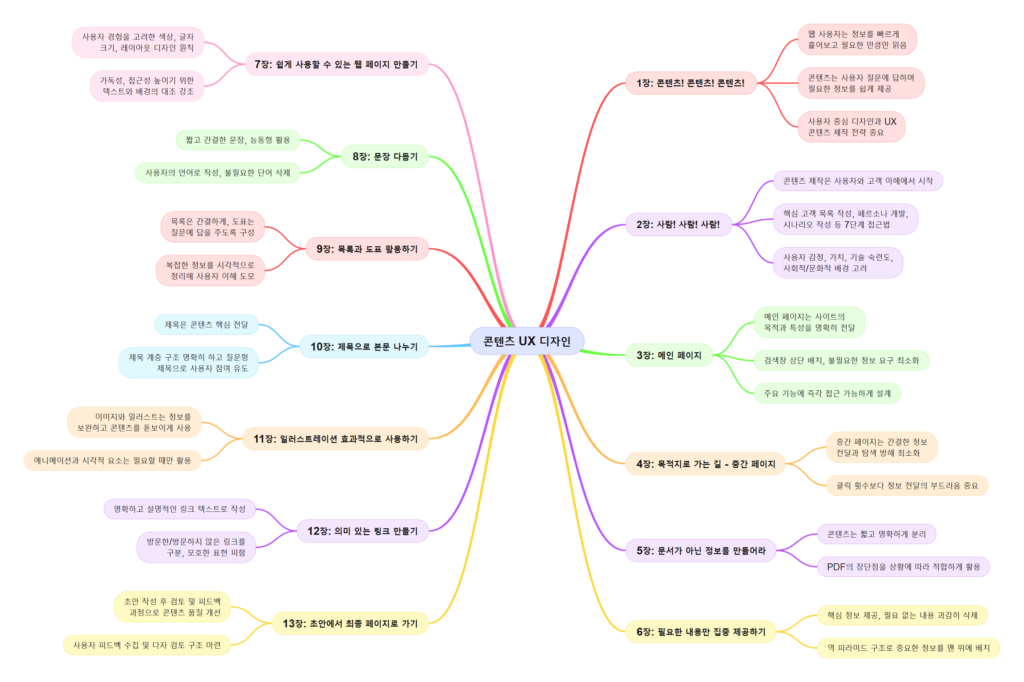
  • 왜 콘텐츠 UX 디자인이 중요한가: 성공적인 웹사이트의 첫걸음

    왜 콘텐츠 UX 디자인이 중요한가: 성공적인 웹사이트의 첫걸음

    오늘날의 디지털 환경에서 웹사이트는 단순한 정보 제공을 넘어 사용자 경험(UX)을 중심으로 한 콘텐츠 설계가 필수입니다. 사용자는 원하는 정보를 빠르게 찾고, 명확히 이해하며, 간편하게 활용할 수 있기를 기대합니다. 이러한 요구를 충족시키기 위해 콘텐츠 UX 디자인은 웹사이트 성공의 핵심 요소로 자리 잡았습니다.


    1. 콘텐츠 UX 디자인의 본질

    콘텐츠 UX 디자인은 단순히 보기 좋은 웹사이트를 만드는 것을 넘어 사용자의 행동과 요구를 중심으로 콘텐츠를 기획하고 디자인하는 과정을 뜻합니다. 좋은 UX 콘텐츠는 사용자가 자신의 목표를 달성할 수 있도록 명확하고 직관적으로 설계됩니다.
    이 과정은 사용자의 심리와 행동 패턴을 이해하는 데서 출발합니다. 사람들은 웹에서 텍스트를 읽기보다는 필요한 정보를 스캔하거나 흝어보는 경향이 있습니다. 따라서, 중요한 정보는 눈에 띄게 배치하고, 핵심 메시지는 간결하게 전달해야 합니다.


    2. 사용자 중심의 콘텐츠 설계

    사용자 중심의 콘텐츠 설계는 UX 디자인의 핵심입니다. 웹사이트 방문자는 자신의 질문에 대한 명확한 답변을 기대합니다. 따라서, 다음과 같은 원칙을 준수해야 합니다:

    1. 정보의 명확성
      방문자가 쉽게 이해할 수 있도록 간결한 언어를 사용하세요. 전문 용어나 불필요한 정보는 사용자 경험을 방해할 수 있습니다.
    2. 질문에 답하는 콘텐츠
      FAQ 형식뿐만 아니라, 페이지 전체에서 사용자 질문에 대한 답을 자연스럽게 제공하는 것이 중요합니다.
      예를 들어, Airbnb는 “어디로 여행하고 싶으세요?”라는 질문을 중심으로 검색 페이지를 설계하여 사용자가 직접 탐색할 필요 없이 적합한 옵션을 찾을 수 있도록 돕습니다.
    3. 빠른 정보 접근성
      중요한 정보는 페이지 상단에 배치하거나, 링크를 통해 쉽게 접근할 수 있게 해야 합니다. 사용자가 스크롤하거나 복잡한 탐색을 하지 않아도 필요한 정보를 찾도록 설계하세요.

    3. 성공적인 콘텐츠 UX 디자인의 사례

    케이스 스터디: Dropbox

    Dropbox는 복잡한 클라우드 저장 서비스를 단순하게 설명하는 데 성공한 사례입니다.

    • 첫 화면에는 사용자가 당장 시작할 수 있는 ‘회원가입’ 버튼이 명확하게 배치되어 있습니다.
    • 페이지에는 복잡한 기술 용어 대신, “모든 파일을 안전하게 보관하세요”와 같은 간결한 문구로 사용자 친화적 메시지를 전달합니다.

    케이스 스터디: IKEA의 제품 설명 페이지

    IKEA의 제품 설명은 소비자 관점에서 설계되었습니다.

    • 제품 사용 시나리오를 중심으로 설명하고, 필요한 치수와 기능을 간결한 표로 제공하며, 사용자의 의문을 미리 해결합니다.
    • 이러한 설계는 소비자 신뢰를 구축하며 구매로 이어지는 경험을 제공합니다.

    4. UX 디자인에서 고려해야 할 실질적인 팁

    1) 콘텐츠 구조화

    콘텐츠는 사용자가 빠르게 정보를 스캔할 수 있도록 구조화되어야 합니다. 다음은 콘텐츠 구조화를 위한 팁입니다:

    • 헤드라인: 페이지나 섹션의 핵심을 요약한 제목을 사용합니다.
    • 리스트: 긴 텍스트는 목록 형태로 나누어 가독성을 높입니다.
    • 시각적 강조: 중요한 정보는 굵은 글씨나 색상으로 강조하여 쉽게 식별되게 합니다.

    2) 반응형 디자인

    모바일, 태블릿, 데스크톱 등 다양한 디바이스에서 콘텐츠가 잘 보이도록 디자인하세요.
    Statista에 따르면, 2024년 기준 인터넷 트래픽의 약 60%가 모바일에서 발생합니다.
    따라서, 모바일 최적화는 선택이 아닌 필수입니다.

    3) 시각 자료 활용

    텍스트만으로는 전달이 어려운 정보를 그래픽, 이미지, 또는 도표로 시각화하세요.
    예를 들어, Google Analytics는 대시보드에서 데이터를 차트로 시각화해 사용자가 핵심 정보를 쉽게 이해할 수 있도록 지원합니다.


    5. 콘텐츠 UX 디자인의 장기적인 가치

    콘텐츠 UX 디자인은 단순히 웹사이트를 더 매력적으로 만드는 작업이 아닙니다.

    • 브랜드 신뢰 구축: 사용자 중심 콘텐츠는 브랜드에 대한 신뢰를 높입니다.
    • 전환율 향상: 명확한 메시지와 직관적인 사용자 경험은 구매 전환율을 높입니다.
    • 사용자 만족도 증가: 잘 설계된 콘텐츠는 방문자가 사이트에 머무는 시간을 증가시키고, 재방문율을 높입니다.

    결론: 콘텐츠 UX 디자인의 시작점

    콘텐츠 UX 디자인은 성공적인 웹사이트를 만드는 데 필수적입니다. 사용자의 요구를 중심으로 콘텐츠를 설계하고, 빠르고 명확하게 정보를 전달하며, 시각적 요소로 사용자 경험을 향상시키세요. 이는 사용자뿐만 아니라, 기업의 목표 달성에도 기여할 것입니다.


  • Buttons – Product owner 2

    Buttons – Product owner 2

    Crafting Effective Button Wireframes: 5 Key Considerations for Designers, Publishers, and Developers

    Buttons are at the heart of digital interfaces, serving as the primary elements of interaction. When creating wireframes or storyboards for buttons, ensuring clarity and alignment among designers, publishers, and developers is crucial. A well-documented button wireframe not only streamlines the implementation process but also reduces miscommunication and errors. In this post, we’ll outline the five most critical considerations when creating button wireframes.


    1. Define the Button’s Purpose and Hierarchy

    Why It Matters:

    The purpose of a button directly impacts its design, placement, and functionality. Establishing a clear hierarchy ensures that users can easily distinguish between primary, secondary, and tertiary actions, guiding their attention and interaction.

    Key Considerations:

    • Primary Buttons: Highlight the most critical actions, such as “Submit” or “Buy Now.” Use bold colors and prominent placement.
    • Secondary Buttons: Support additional actions, such as “Cancel” or “Back.” Use subtler styling like outlines or muted colors.
    • Tertiary Buttons: For minor or contextual actions, such as “Learn More.” Often styled as text links.

    Documentation Tips:

    • Clearly label buttons in the wireframe based on their hierarchy (e.g., Primary, Secondary).
    • Include annotations explaining the button’s purpose and its role in the user flow.

    2. Specify Button States and Interactions

    Why It Matters:

    Buttons must provide visual feedback to inform users about their status and interactivity. Defining these states in the wireframe ensures consistency across the design and development stages.

    Common Button States:

    1. Default: The resting state when no interaction occurs.
    2. Hover: Changes when the cursor is over the button (web).
    3. Pressed/Active: Indicates the button has been clicked or tapped.
    4. Disabled: Grayed out when the button is inactive or unavailable.
    5. Loading: Shows progress for actions that take time.

    Documentation Tips:

    • Illustrate all button states in the wireframe, with visual examples or mockups.
    • Annotate interactions such as hover effects, animations, or transitions.
    • For mobile, specify tactile feedback like vibrations for taps.

    3. Ensure Accessibility Standards

    Why It Matters:

    Accessible buttons cater to all users, including those with disabilities. Ensuring accessibility in the wireframe phase prevents costly revisions during development.

    Key Considerations:

    • Size: Buttons should have a minimum touch target size of 48x48dp for mobile interfaces.
    • Contrast: Meet WCAG guidelines with sufficient contrast between text and background.
    • Keyboard Navigation: Buttons should be operable with a keyboard and include clear focus states.
    • Screen Reader Support: Include ARIA labels or text equivalents for non-text buttons.

    Documentation Tips:

    • Include specific accessibility requirements in the wireframe annotations.
    • Provide examples of how focus and hover states will appear for keyboard users.
    • Annotate ARIA roles and labels for screen readers.

    4. Document Placement and Alignment

    Why It Matters:

    Button placement significantly affects usability. Proper alignment and spacing contribute to a visually cohesive design and prevent user confusion.

    Key Considerations:

    • Align buttons consistently across the interface (e.g., primary actions on the bottom-right).
    • Maintain sufficient spacing between buttons to avoid accidental clicks or taps.
    • Follow platform-specific guidelines for button placement (e.g., floating action buttons on mobile).

    Documentation Tips:

    • Use grid systems in the wireframe to illustrate button alignment and spacing.
    • Include annotations specifying alignment rules, such as “Center align this button within its container.”
    • Highlight platform-specific adjustments (e.g., mobile vs. desktop layouts).

    5. Detail Functional Requirements and Edge Cases

    Why It Matters:

    Buttons often interact with complex system logic, such as disabling states or triggering backend processes. Documenting these functional requirements ensures developers implement the button behavior correctly.

    Key Considerations:

    • Functional Logic: Define when a button is enabled, disabled, or in a loading state.
    • Error Handling: Specify what happens when an action fails (e.g., error messages).
    • Edge Cases: Include scenarios like network interruptions or invalid inputs.
    • Performance Feedback: Explain how users will know an action is processing (e.g., spinners, loaders).

    Documentation Tips:

    • Use flowcharts or diagrams in the wireframe to detail button behavior across user journeys.
    • Annotate specific conditions for enabling or disabling buttons.
    • Include examples of success and error messages that appear after button actions.

    Additional Best Practices for Button Wireframes

    1. Use Consistent Naming Conventions: Label buttons clearly in the wireframe (e.g., “Primary_Button_Submit”).
    2. Provide Visual and Text Annotations: Combine visual examples with text annotations to avoid ambiguity.
    3. Collaborate Early: Involve designers, publishers, and developers early in the wireframe process to address potential challenges.
    4. Test with Prototypes: Before finalizing wireframes, create clickable prototypes to validate button behavior with stakeholders and users.

    Conclusion

    Creating effective button wireframes requires careful attention to purpose, states, accessibility, placement, and functional logic. As a Product Owner, your role is to ensure these details are clearly documented to streamline collaboration and implementation. By addressing these five considerations, you can minimize miscommunication and deliver buttons that meet both user and business goals.


  • 버튼 – 서비스 기획자 2

    버튼 – 서비스 기획자 2


    개요

    버튼은 사용자와 시스템 간의 상호작용을 연결하는 핵심 컴포넌트입니다. 버튼의 역할을 정확히 전달하고, 디자이너, 퍼블리셔, 개발자가 같은 이해를 공유하도록 하기 위해서는 명확하고 체계적인 와이어프레임(스토리보드 또는 기획서)이 필수적입니다. 이 글에서는 버튼 와이어프레임을 작성할 때 반드시 고려해야 할 5가지 핵심 요소를 살펴봅니다.


    1. 버튼의 목적과 역할 명확화

    버튼의 핵심 목적과 역할을 명확히 정의하는 것은 와이어프레임의 가장 기본이자 중요한 요소입니다. 각 버튼이 수행해야 할 기능과 그로 인해 사용자 경험에 어떤 영향을 줄 것인지 분명히 해야 합니다.

    기획 시 작성해야 할 정보

    • 버튼의 기능 명세: 버튼 클릭 시 어떤 동작이 실행되는가? (예: ‘제출’, ‘삭제’, ‘확인’)
    • 버튼의 맥락과 위치: 페이지나 화면에서 버튼이 어떤 흐름 속에 배치되는가?

    실제 기획서 예시

    • 기능: “제출 버튼 클릭 시 폼 데이터를 서버에 전송”
    • 위치: “화면 하단 중앙에 배치하여 주요 작업 버튼임을 강조”

    중요성

    목적과 역할을 명확히 정의하지 않으면 디자이너는 시각적 설계에서 혼란을 겪고, 개발자는 기능 구현에서 오류를 발생시킬 수 있습니다.


    2. 시각적 우선순위와 스타일 가이드

    디자이너가 버튼을 설계할 때 참고할 수 있는 시각적 우선순위와 스타일 가이드를 와이어프레임에 포함해야 합니다.

    기획 시 작성해야 할 정보

    • 우선순위: 버튼이 기본 버튼(Primary), 보조 버튼(Secondary), 텍스트 버튼 등으로 구분되는지 정의.
    • 스타일: 버튼의 색상, 크기, 여백 등 시각적 요소에 대한 가이드 제공.

    실제 기획서 예시

    • 기본 버튼: 주 작업 버튼으로, 파란색(#007BFF)과 흰색 텍스트를 사용.
    • 보조 버튼: 보조 작업 버튼으로, 회색(#CCCCCC)과 검정 텍스트 사용.

    중요성

    일관된 스타일 가이드는 퍼블리셔가 버튼을 HTML/CSS로 구현할 때 혼란을 줄이고, 화면 전체의 디자인 통일성을 유지합니다.


    3. 인터랙션과 상태 정의

    버튼의 인터랙션과 상태 변화는 사용자 경험에 직접적인 영향을 미칩니다. 와이어프레임에서 버튼의 상태 변화를 명확히 정의해야 개발자와 퍼블리셔가 이를 제대로 구현할 수 있습니다.

    기획 시 작성해야 할 정보

    • 버튼의 다섯 가지 상태:
      1. 기본 상태(Default)
      2. 마우스 오버(Hover)
      3. 클릭 상태(Active)
      4. 비활성화 상태(Disabled)
      5. 로딩 상태(Loading)

    실제 기획서 예시

    • Default: 파란색 배경, 흰색 텍스트.
    • Hover: 파란색 배경의 밝기를 10% 증가.
    • Loading: 버튼 내부에 로딩 스피너 추가.

    중요성

    정의되지 않은 인터랙션은 디자이너와 개발자 간의 불필요한 의사소통 비용을 초래하고, 결과적으로 불완전한 사용자 경험으로 이어질 수 있습니다.


    4. 버튼의 크기와 클릭 가능 영역

    버튼의 크기와 클릭 가능 영역은 모바일과 데스크톱 모두에서 사용자의 편의성을 결정짓는 중요한 요소입니다. 와이어프레임에서 버튼 크기와 여백(터치 영역)을 명확히 기재해야 합니다.

    기획 시 작성해야 할 정보

    • 크기 기준:
      • 모바일: 최소 48x48px.
      • 데스크톱: 최소 32x32px.
    • 여백: 버튼 간 최소 여백은 8px 이상으로 설정.

    실제 기획서 예시

    • 모바일: 버튼 크기 56x56px, 주변 여백 12px.
    • 데스크톱: 버튼 크기 44x44px, 주변 여백 8px.

    중요성

    클릭 가능한 영역이 너무 작으면 사용자가 작업을 실패할 가능성이 높아지고, 이는 UX 품질 저하로 이어집니다.


    5. 접근성 고려

    모든 사용자가 버튼을 쉽게 인식하고 사용할 수 있도록 접근성을 고려해야 합니다. 이 정보는 기획서에 필수로 포함되어야 하며, 디자이너와 개발자가 구현 시 이를 참고할 수 있어야 합니다.

    기획 시 작성해야 할 정보

    • 색상 대비: 버튼 텍스트와 배경의 명암비는 4.5:1 이상.
    • ARIA 레이블: 버튼의 기능을 스크린 리더가 읽을 수 있도록 레이블 추가.
    • 키보드 네비게이션: 버튼이 탭(Tab) 키로 접근 가능해야 함.

    실제 기획서 예시

    • ARIA 레이블: <button aria-label="제출하기">
    • 색상 대비: 배경색(#007BFF)과 텍스트 색(#FFFFFF)의 대비 비율 8.59:1.

    중요성

    접근성을 고려하지 않은 버튼은 장애를 가진 사용자나 특수 환경에서 제대로 작동하지 않을 수 있습니다.


    결론

    버튼 와이어프레임(스토리보드 또는 기획서)은 디자이너, 퍼블리셔, 개발자가 같은 목표와 이해를 공유하도록 돕는 중요한 문서입니다. 사용자의 기대를 충족시키고, 프로젝트의 정확성과 일관성을 높이기 위해 위에서 제시한 5가지 요소(목적과 역할, 스타일 가이드, 인터랙션 정의, 크기와 영역, 접근성 고려)를 명확히 기재하는 것이 필수적입니다.


  • Buttons – Product owner 1

    Buttons – Product owner 1

    Designing Buttons with User Expectations in Mind: A Guide for Product Owners

    Buttons are critical touchpoints in any digital product, serving as the gateway between user intentions and system actions. From a Product Owner’s perspective, ensuring buttons meet user expectations is crucial for achieving business objectives, optimizing usability, and fostering trust. This article outlines what users expect from buttons, how to align design with these expectations, and actionable steps Product Owners can take to deliver a superior user experience.


    What Do Users Expect from Buttons?

    Users approach buttons with clear expectations, influenced by their past digital experiences and intuitive understanding of interaction design. Meeting these expectations is key to ensuring satisfaction and usability.

    1. Clarity of Purpose

    Users expect buttons to explicitly convey their function. Ambiguity can lead to confusion or errors.

    • A button labeled “Buy Now” should lead directly to a checkout process.
    • Avoid vague labels like “Click Here”, which do not explain the action’s outcome.

    2. Ease of Interaction

    Users want buttons to be effortless to locate, recognize, and use.

    • Buttons should be large enough for easy tapping or clicking.
    • Adequate spacing prevents accidental interactions, especially on mobile devices.

    3. Visual Cues for Interactivity

    Buttons must look and feel interactive to users.

    • Interactive elements should have distinct visual styles (e.g., shadows, borders, hover effects).
    • Disabled buttons should clearly indicate they are non-functional.

    4. Immediate Feedback

    Users expect buttons to confirm their interactions through visual or functional feedback.

    • Examples include color changes, animations, or success messages.
    • Feedback reassures users their action has been acknowledged.

    5. Alignment with Context

    Buttons should fit seamlessly into the interface and match the user’s current task.

    • Primary buttons should stand out for critical actions.
    • Secondary actions should have a subtler design to avoid visual competition.

    6. Consistency Across the System

    Users expect consistent button behavior throughout the product.

    • For instance, all primary buttons should share the same color and size.
    • States like hover, active, and disabled should follow uniform patterns.

    How to Meet User Expectations with Button Design

    Product Owners play a critical role in ensuring button design aligns with user needs. By working closely with designers and developers, you can create buttons that are functional, user-friendly, and aligned with business goals.


    1. Define Button Hierarchy

    Clear visual hierarchy helps users distinguish between primary and secondary actions. As a Product Owner:

    • Prioritize primary actions for business-critical goals (e.g., “Sign Up” or “Add to Cart”).
    • Use secondary and tertiary buttons for less important or optional actions.
    • Collaborate with designers to visually differentiate these buttons.

    Example: In a payment page, the “Pay Now” button should dominate visually, while the “Cancel” button should be less prominent.


    2. Craft Clear and Actionable Labels

    Button labels are a user’s guide to interaction. To ensure clarity:

    • Use concise, action-oriented text that reflects the intended outcome (e.g., “Download Report”).
    • Avoid generic terms or jargon that may confuse users.
    • Test labels with real users to validate their understanding.

    Example: A button reading “Get Free Trial” is more compelling than one labeled “Submit”.


    3. Prioritize Accessibility

    Buttons must be designed inclusively to accommodate all users. Product Owners should:

    • Advocate for WCAG-compliant contrast ratios and accessible font sizes.
    • Ensure buttons are keyboard and screen reader compatible with proper ARIA labels.
    • Collaborate with QA teams to validate accessibility in real-world scenarios.

    Example: For visually impaired users, ensure a “Submit Form” button is announced correctly by screen readers.


    4. Implement Feedback Mechanisms

    Feedback is essential to building trust and guiding users. Effective buttons provide:

    • Visual feedback (e.g., color changes, animations) on hover, active, and disabled states.
    • Progress indicators for long-running actions, such as a spinner or progress bar.
    • Confirmation messages for successful tasks or error messages for failed ones.

    Example: A “Submit” button that changes to “Submitting…” and then to “Submitted” reassures users that the process is progressing.


    5. Optimize for Mobile Usability

    Mobile interfaces pose unique challenges for button design. As a Product Owner:

    • Ensure buttons meet touch-friendly size requirements (minimum 48x48dp).
    • Place primary actions at the bottom of the screen for easy thumb reach.
    • Space buttons adequately to prevent accidental taps.

    Example: In a mobile banking app, place the “Transfer” button at the bottom-right corner for thumb-friendly access.


    6. Reflect User Mental Models

    Buttons should align with users’ intuitive expectations. This involves:

    • Placing buttons where users naturally expect them (e.g., “Next” on the bottom-right of forms).
    • Following established design conventions (e.g., a trash can icon for delete).

    Tip: Validate assumptions about user mental models through usability testing.


    7. Plan for Error Handling and Edge Cases

    Anticipate scenarios where user inputs or system conditions may fail. Effective button design includes:

    • Disabled states for unavailable actions (e.g., incomplete form fields).
    • Clear error messages to guide users on corrective actions.
    • Confirmation prompts for irreversible actions, such as account deletion.

    Example: A “Delete Account” button should always include a secondary confirmation dialog.


    Key Actions for Product Owners

    To ensure buttons meet user expectations and business goals, Product Owners should:

    1. Define Priorities: Clearly identify which actions are critical to user and business objectives.
    2. Collaborate Effectively: Work closely with designers and developers to align on button hierarchy, style, and functionality.
    3. Enforce Standards: Advocate for consistent button behavior and styling across the product.
    4. Champion Accessibility: Prioritize inclusivity by ensuring buttons are accessible to all users.
    5. Test and Iterate: Use usability testing to validate button designs and make data-driven improvements.

    Conclusion

    Buttons are more than visual elements—they are the foundation of interaction within any product. As a Product Owner, ensuring buttons align with user expectations requires clear priorities, collaboration, and a user-first mindset. By delivering well-designed buttons, you can improve usability, achieve business goals, and foster trust with your users.


  • 버튼 – 서비스 기획자 1

    버튼 – 서비스 기획자 1

    사용자가 버튼에 기대하는 것과 서비스 기획자가 해야 할 일


    버튼에 대한 사용자의 기대란?

    사용자가 버튼을 사용할 때 가장 기본적으로 가지는 기대는 간단합니다. ‘이 버튼을 누르면 내가 원하는 작업이 실행된다.’ 그러나 이 간단한 기대는 심리적, 기능적, 경험적 요소가 얽힌 복합적인 요구를 포함합니다. 버튼 설계에서 사용자의 기대를 충족하려면 버튼이 단순한 클릭 가능 요소를 넘어 명확성, 신뢰성, 직관성을 제공해야 합니다.


    사용자가 버튼에 가지는 주요 기대

    1. 명확한 역할

    사용자는 버튼이 무엇을 할 것인지 명확히 이해할 수 있기를 기대합니다.

    • 예시: “제출” 버튼은 데이터를 제출한다는 메시지를 명확히 전달해야 합니다.
    • 실패 사례: 불명확한 아이콘 버튼(예: 텍스트 없는 ‘✔️’)은 혼란을 초래할 수 있습니다.

    2. 즉각적 반응

    사용자는 버튼을 누른 후 시스템이 즉각적으로 반응할 것을 기대합니다.

    • 예시: 클릭 후 로딩 애니메이션이나 상태 변경이 없다면 사용자는 버튼이 작동하지 않았다고 생각할 수 있습니다.

    3. 기능 수행의 성공 여부

    버튼을 클릭한 후 기대한 결과가 성공적으로 완료되기를 바랍니다.

    • 예시: “삭제” 버튼을 클릭했을 때 해당 항목이 즉시 제거되어야 합니다.
    • 실패 사례: 작업이 완료되지 않았는데 피드백이 없는 경우, 사용자 불만족을 초래합니다.

    4. 심미적 만족

    버튼은 단순히 기능적 요소에 그치지 않고, 사용자가 시각적으로나 감성적으로 만족감을 느낄 수 있는 요소로 디자인되기를 기대합니다.

    • 예시: 깔끔한 디자인, 적절한 애니메이션 효과, 브랜드 색상 반영.

    5. 접근성과 사용 편의성

    모든 사용자가 버튼을 쉽게 사용할 수 있기를 기대합니다.

    • 예시: 모바일 사용자는 터치 영역이 충분히 커야 하며, 색상 대비가 명확해야 합니다.

    서비스 기획자가 해야 할 일

    사용자의 기대를 충족하고, 나아가 이를 초과하는 버튼 경험을 설계하기 위해 서비스 기획자는 다양한 측면에서 신경을 써야 합니다.


    1. 사용자 요구 분석

    버튼 설계는 서비스의 맥락과 사용자의 요구를 깊이 이해하는 것에서 시작됩니다.

    • 방법:
      • 사용자 인터뷰와 설문을 통해 버튼의 사용 목적과 기대를 파악.
      • 사용자의 주요 동작 흐름(UX Flow)을 분석해 버튼의 역할 정의.
    • 예시: 결제 페이지의 “결제하기” 버튼은 구매 완료라는 사용자의 목표를 달성하는 핵심 요소입니다.

    2. 명확한 텍스트와 레이블 제공

    버튼 텍스트와 레이블은 사용자 기대와 버튼의 기능을 직관적으로 연결합니다.

    • 해야 할 일:
      • 버튼 텍스트는 간결하고 구체적으로 작성: “확인” 대신 “주문 완료”.
      • 다국어 서비스에서는 언어별로 자연스러운 번역 제공.
    • 실패 사례: 텍스트 없이 아이콘만 제공된 경우, 버튼의 의도가 모호해질 수 있습니다.

    3. 적절한 시각적 강조

    중요한 버튼은 시각적으로 강조하여 사용자가 쉽게 인식할 수 있도록 설계해야 합니다.

    • 해야 할 일:
      • 기본 작업(Primary Action)은 밝고 대비가 강한 색상으로 표현.
      • 덜 중요한 버튼은 중립적인 색상으로 디자인.
    • 예시: 결제 페이지에서 “결제하기” 버튼은 빨간색, “취소” 버튼은 회색으로 구분.

    4. 즉각적인 피드백 설계

    사용자는 클릭한 후 시스템이 제대로 작동하고 있다는 신호를 기대합니다.

    • 해야 할 일:
      • 버튼 클릭 시 색상, 음영, 크기 변화 등 시각적 피드백 제공.
      • 로딩 중 상태(스피너, 진행 막대) 또는 성공/실패 메시지 표시.
    • 예시: “로그인” 버튼 클릭 시 로딩 애니메이션과 함께 “로그인 중…” 메시지 표시.

    5. 반응성 높은 인터랙션 설계

    버튼은 모든 디바이스에서 최적의 반응성을 제공해야 합니다.

    • 해야 할 일:
      • 모바일 터치 영역은 48x48px 이상으로 설정.
      • 버튼이 다양한 해상도에서 정상적으로 작동하도록 반응형 디자인 적용.
    • 실패 사례: 터치 영역이 너무 작아 모바일 사용자가 클릭에 실패.

    6. 심리적 만족감 강화

    심리적으로 사용자가 버튼을 누르는 순간 기쁨이나 성취감을 느끼도록 디자인합니다.

    • 해야 할 일:
      • 버튼 클릭 시 애니메이션 효과 추가(예: 부드러운 팽창 또는 축소).
      • 긍정적인 문구와 색상을 사용해 사용자의 기분을 고양.
    • 예시: “축하합니다! 결제가 완료되었습니다.” 메시지와 함께 버튼이 녹색으로 전환.

    7. 접근성(Accessibility) 확보

    모든 사용자가 버튼을 사용할 수 있도록 접근성을 강화해야 합니다.

    • 해야 할 일:
      • 시각장애인을 위한 스크린 리더 지원.
      • 충분한 색상 대비(명암비 4.5:1 이상).
      • 키보드로 버튼 탐색 및 실행 가능하도록 설계.
    • 실패 사례: 색상으로만 활성화 상태를 표시해 색맹 사용자가 혼란.

    8. 사용자 테스트와 지속적인 개선

    버튼 설계는 사용자 피드백을 바탕으로 지속적으로 개선해야 합니다.

    • 해야 할 일:
      • 버튼의 클릭률, 전환율 등을 분석해 데이터 기반 개선.
      • A/B 테스트를 통해 최적의 버튼 텍스트, 색상, 위치 결정.
    • 예시: “지금 가입하기” 버튼이 “무료 체험 시작” 버튼보다 전환율이 높은지 테스트.

    결론

    사용자는 버튼을 통해 단순한 작업 이상을 기대합니다. 명확하고 직관적인 설계는 물론, 즉각적인 피드백과 심리적 만족까지 포함한 경험을 제공합니다. 서비스 기획자는 사용자의 기대를 심도 있게 분석하고 이를 충족시키기 위한 기능적, 심미적, 접근성 중심의 설계를 통해 사용자 경험을 최적화할 수 있습니다.


  • Buttons – Functions

    Buttons – Functions

    The Core Functions of Buttons: A Detailed Guide for UX/UI Professionals

    Buttons play a critical role in user interfaces, acting as the primary mechanism for interaction. Their importance lies in their ability to provide users with clear, actionable paths, guiding workflows and enabling seamless navigation. In this article, we will explore the major functions of buttons, dissecting their roles and impact on usability and user experience.


    What Are the Core Functions of Buttons?

    At their essence, buttons bridge the gap between user intention and system response. Their design and functionality aim to minimize user effort while maximizing clarity and efficiency. Here are the key functions of buttons:


    1. Triggering Actions

    Buttons are action-oriented elements that enable users to initiate specific tasks or processes. This is their most fundamental function and includes tasks such as:

    • Form Submission: Buttons like “Submit” or “Sign Up” complete user input processes.
    • Data Processing: Trigger backend operations like saving or uploading.
    • System Control: Start, pause, or stop actions, such as a video playback button.

    Example:

    In an e-commerce platform:

    • The “Add to Cart” button initiates the process of adding an item to the user’s shopping cart.

    Key Design Considerations:

    • Ensure buttons clearly indicate the action they trigger.
    • Use labels that are short, descriptive, and action-oriented, such as “Save Changes” or “Download File.”

    2. Facilitating Navigation

    Buttons are integral to navigation, guiding users through workflows and interface hierarchies. They make it possible for users to:

    • Move between pages (e.g., “Next” or “Previous”).
    • Open new interfaces, such as modals or pop-ups.
    • Access external resources or links.

    Example:

    • A “Learn More” button might navigate users to a detailed product description page.
    • Pagination buttons (e.g., “1, 2, 3”) help users browse multi-page content.

    Key Design Considerations:

    • Place navigation buttons in intuitive locations (e.g., at the bottom of forms or content).
    • Provide visual feedback, such as hover effects, to guide user expectations.

    3. Indicating Status

    Buttons are effective tools for communicating the current status of a system or user interaction. They can:

    • Show a process is in progress (e.g., with a spinner or “Loading” state).
    • Indicate completion (e.g., “Done” or “Success”).
    • Highlight system availability (e.g., “Offline” or “Try Again”).

    Example:

    • A “Submit” button might change to “Submitting…” while data is being processed.
    • After successful completion, it can display “Submitted!”

    Key Design Considerations:

    • Use clear state changes (e.g., color or label changes) to reflect the button’s status.
    • Ensure transitions are smooth and provide feedback for each interaction phase.

    4. Providing Feedback

    Feedback is an essential aspect of usability. Buttons visually and functionally communicate their interactivity, reassuring users that their actions have been acknowledged.

    Types of Feedback:

    • Hover Effects: Highlighting a button when a cursor hovers over it.
    • Active State: Changing the appearance when clicked or tapped.
    • Disabled State: Graying out non-functional buttons to clarify their inactivity.

    Example:

    • A “Confirm Purchase” button may turn green briefly after being clicked to confirm the action has been received.

    Key Design Considerations:

    • Design clear visual cues for each state (default, hover, active, disabled).
    • Combine visual feedback with auditory or haptic responses for accessibility.

    5. Promoting User Decisions

    Buttons act as decision points, enabling users to make choices and commit to actions. These decisions might involve:

    • Confirming or canceling operations.
    • Choosing between multiple options (e.g., “Yes” or “No”).
    • Providing alternatives (e.g., “Retry” or “Cancel”).

    Example:

    • In a dialog box, a “Delete” button prompts users to confirm deletion, often accompanied by a “Cancel” button.

    Key Design Considerations:

    • Design buttons with distinct visual hierarchies to highlight primary choices.
    • Avoid overloading users with too many options in a single view.

    6. Enhancing Accessibility

    Accessibility is a critical function of buttons, enabling users with varying abilities to interact with digital interfaces. Buttons should:

    • Be operable via multiple input methods (mouse, keyboard, touchscreen, assistive devices).
    • Provide clear, descriptive labels for screen readers.
    • Meet minimum size requirements for touch interactions.

    Example:

    • A button labeled “Play Video” should have an ARIA label that a screen reader can interpret.

    Key Design Considerations:

    • Use ARIA attributes to describe the button’s function.
    • Ensure buttons meet WCAG contrast ratio guidelines for readability.

    7. Driving Conversions

    In marketing and e-commerce, buttons play a key role in driving user engagement and conversions. These buttons often encourage users to take desired actions, such as:

    • Purchasing products (e.g., “Buy Now”).
    • Signing up for services (e.g., “Get Started”).
    • Downloading resources (e.g., “Download Free Guide”).

    Example:

    • A “Subscribe Now” button on a landing page may lead to increased newsletter signups.

    Key Design Considerations:

    • Use persuasive language that creates urgency (e.g., “Limited Offer – Sign Up Now”).
    • Position conversion buttons prominently and use vibrant colors to grab attention.

    8. Controlling System Functions

    Buttons often serve as direct controls for system functionality, especially in interactive or multimedia environments. These controls may include:

    • Play/Pause buttons for media.
    • Start/Stop buttons for processes like file transfers.
    • Toggle switches for enabling or disabling features.

    Example:

    • A “Dark Mode” toggle button allows users to switch between light and dark themes.

    Key Design Considerations:

    • Provide clear visual indicators of the current state.
    • Ensure buttons are responsive and do not lag during transitions.

    9. Improving Workflow Efficiency

    Buttons simplify workflows by consolidating multiple steps into a single action. For example:

    • A “Pay Now” button can bundle payment details, order confirmation, and checkout processes.
    • A “Save and Continue” button helps users maintain progress in multi-step forms.

    Example:

    • In a project management app, a “Mark Complete” button streamlines task tracking.

    Key Design Considerations:

    • Use progressive disclosure to hide complexity, revealing additional options only when needed.
    • Design buttons to reflect the user’s mental model of their task flow.

    Conclusion

    Buttons are not merely decorative elements; they are vital components that enable interaction, navigation, and decision-making in digital interfaces. By understanding their core functions and designing them with intention, you can create buttons that enhance usability, improve accessibility, and drive meaningful user engagement.